

Uniformed Protective Services (UPS) students from Stratford-upon-Avon College recently took part in an intensive mass casualty simulation, designed to prepare them for future careers across the armed forces and emergency services.

Students were joined by three members of FastAid. The session was led by Karen Henry, Chair and Training Manager for FastAid alongside her full-time job as a Paramedic, Matt Spence, active Community First Responder (CFR) with FastAid and Aaron Cosford, Student Paramedic with West Midlands Ambulance Service.
To begin, students were shown a presentation with information about the importance of responding quickly in an emergency and what the procedures are. They then had CPR and first aid training using mannequins to practise what they had learnt.
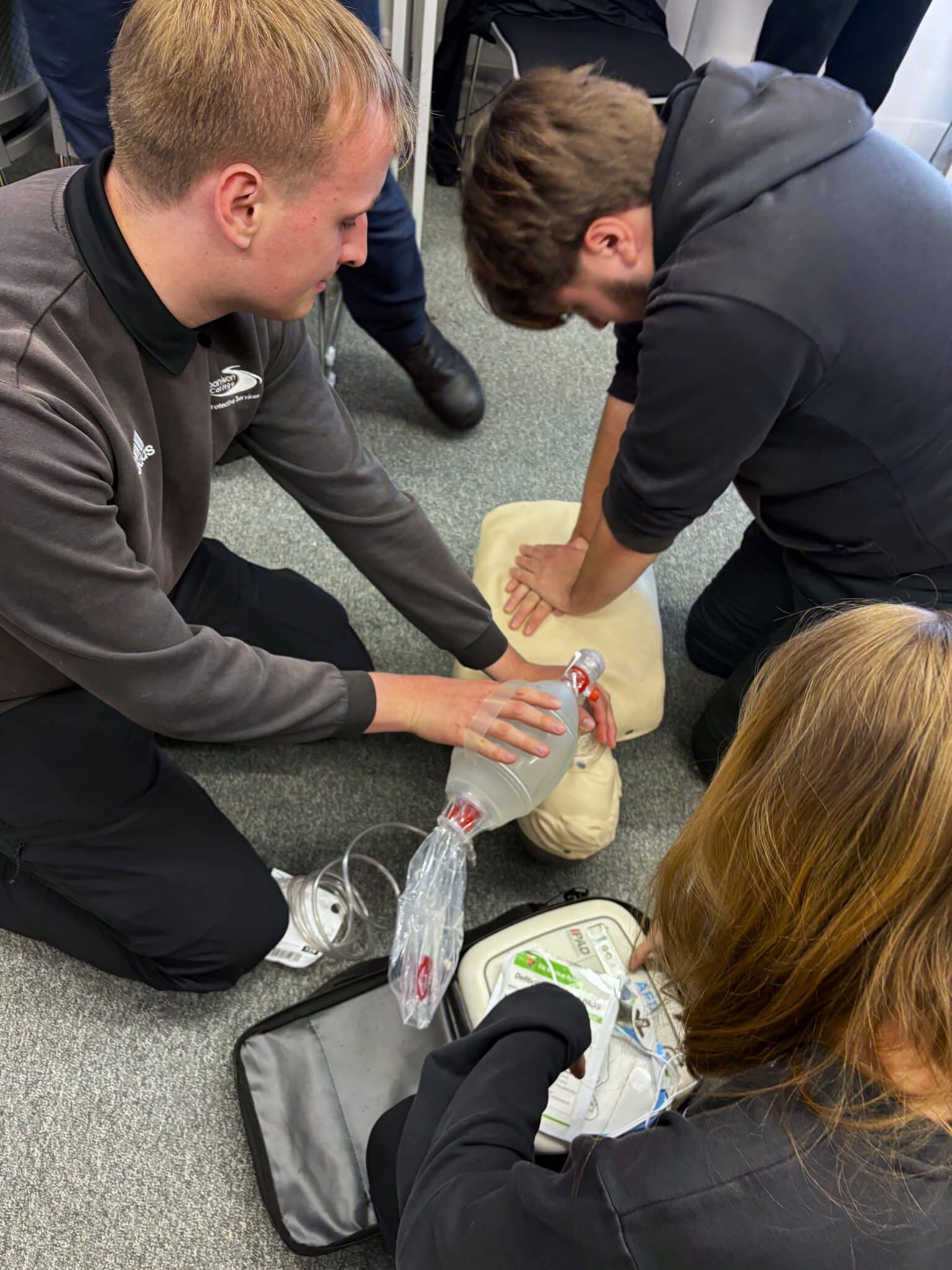
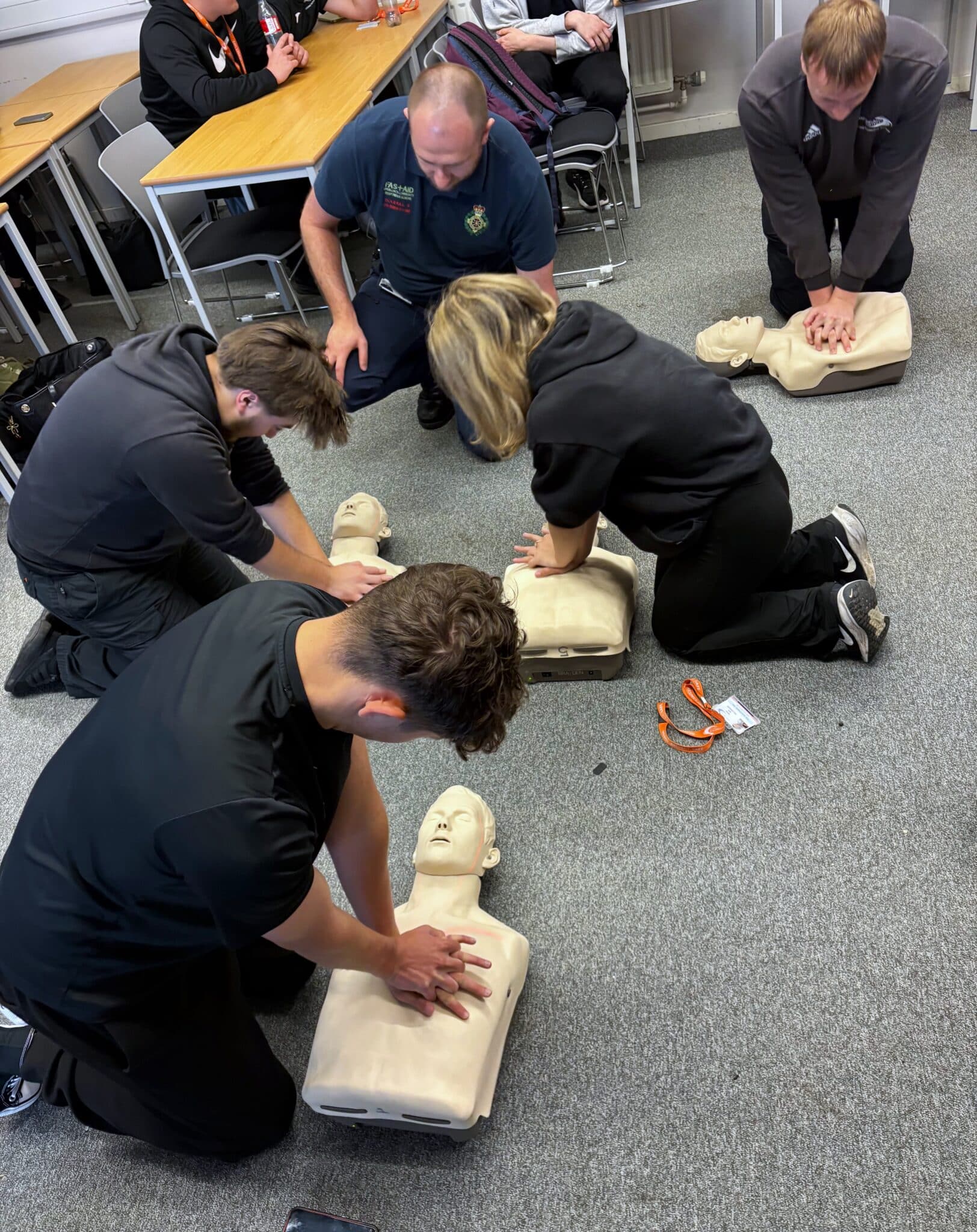
Students began by learning about CPR and first aid in a hands on training session
The next part of the day was the mass casualty simulation. The event took place in the College’s gym, and the FastAid team set up an emergency scenario using mannequins with a variety of injuries. They then separated the students into ‘walking wounded’ or first responder. The ‘injured’ took their places in the gym with felt tip pen marking their ‘injuries’ and the first responders had to work together to assess the situation, triage patients, and treat the injuries they were able to.


Have a look at what they got up to!
Following this, the students then got to have a look at the team’s emergency vehicle and the kit they carry with them.
FastAid CFR Matt was delighted with how the students responded to the session: “It was a real pleasure for the FastAid team to come in and work with the students. They did brilliantly well throughout the session, and all of our team were genuinely amazed and impressed by what they achieved in such a short space of time. They were highly engaged, asked excellent questions, and gave 110% from start to finish.
At FastAid, we are always happy to support opportunities like this and to help provide training and insight into the role of the ambulance service, particularly the work of Community First Responders. We strongly believe that teaching lifesaving skills such as CPR and catastrophic bleed control is incredibly important, and we want to help spread this knowledge as widely as possible within the community.”

UPS student, Aimee Ball, commented: “I have really enjoyed the practical session. It gives you a physical idea of what you want to do; a realistic experience of a real-life situation. It has definitely given me more career options to consider.”
UPS Lecturer, Natalie Parker, commented on why the session was so useful to students: “It is part of their practical assessment, but mainly, it is relevant as any service would have major casualty scenarios and need first aid training. So, this is giving students skills they will take with them in their future careers.”