


Early Years & Education students from Stratford-upon-Avon College took their learning into the world of virtual reality recently as they explored how new technologies can support education.

First-year students were learning about the Connectivism Learning Theory: a theory for the digital age which talks about the pivotal role of digital tools in modern education. Using VR, the students discovered how immersive technology is used across the College for learning. First, they tried Nature Treks. This app lets students explore different environments, from under the sea to rainforests. It’s a calming experience, with serene landscapes and meditative sounds. Nature Treks is used by the College’s GCSE English students to develop their descriptive writing, and psychology students learning about mindfulness. They also tried OpenBrush, an app used by Fashion and Graphic Design students which allowed them to draw and design in 3D.
Students on the second year of the course chose apps which fostered team building skills. The first app they used was Richie’s Plank experience – in which students ride a lift up to a plank high above a building. They could walk the plank, and if they choose, step off the plank to see what it’s like to fall. Students coached each other through the experience and a few conquered their fear. Students then competed for high scores in BeatSaber, a rhythm game in which students must hit blocks in time to music.


Students could experience a wide range of programmes, including Richie’s Plank Experience, Beatsaber and Nature Treks
Learning Technologist, Emily Cossey, details how VR is being used at College and why this particular type of technology benefits the students: “Across the College, Virtual Reality has been incorporated into a wide range of courses, including UPS, Sport, Health & Social Care, Psychology, Maths and English, as well as Fashion and Graphic Design. By engaging with VR, students investigate how this technology might influence their future industries, develop their communication and teamwork abilities, build empathy by experiencing other people’s perspectives, and visit diverse locations and scenarios without leaving the classroom.
As the technology continues to develop and expand, we’re likely to see virtual reality take on a wider role in education. It is fantastic for Early Years & Education students to have the opportunity to learn about VR at college as it helps them understand innovative teaching methods that can enhance engagement and creativity in the classroom. Experiencing VR first-hand also prepares them to adapt and integrate new technologies into their future work.”
All the students found the sessions enlightening, thought provoking and, importantly, fun! Renay Salter commented: “I enjoyed the lesson being different. Learning wasn’t just sitting in a classroom, it was fun!” Christopher Martin agreed and added: “It was great to watch everyone be foolish and have a laugh! Also, it relates to our learning as we can explore pedagogical approaches and maybe apply this type of delivery to when we teach.” Amy Lenksaite concluded: “It was great stress relief and a lovely team bonding exercise; everyone got involved and encouraged each other. Plus, it has opened loads of new ways of learning – not just knowledge but how you could use VR for emotional regulation in children etc.”
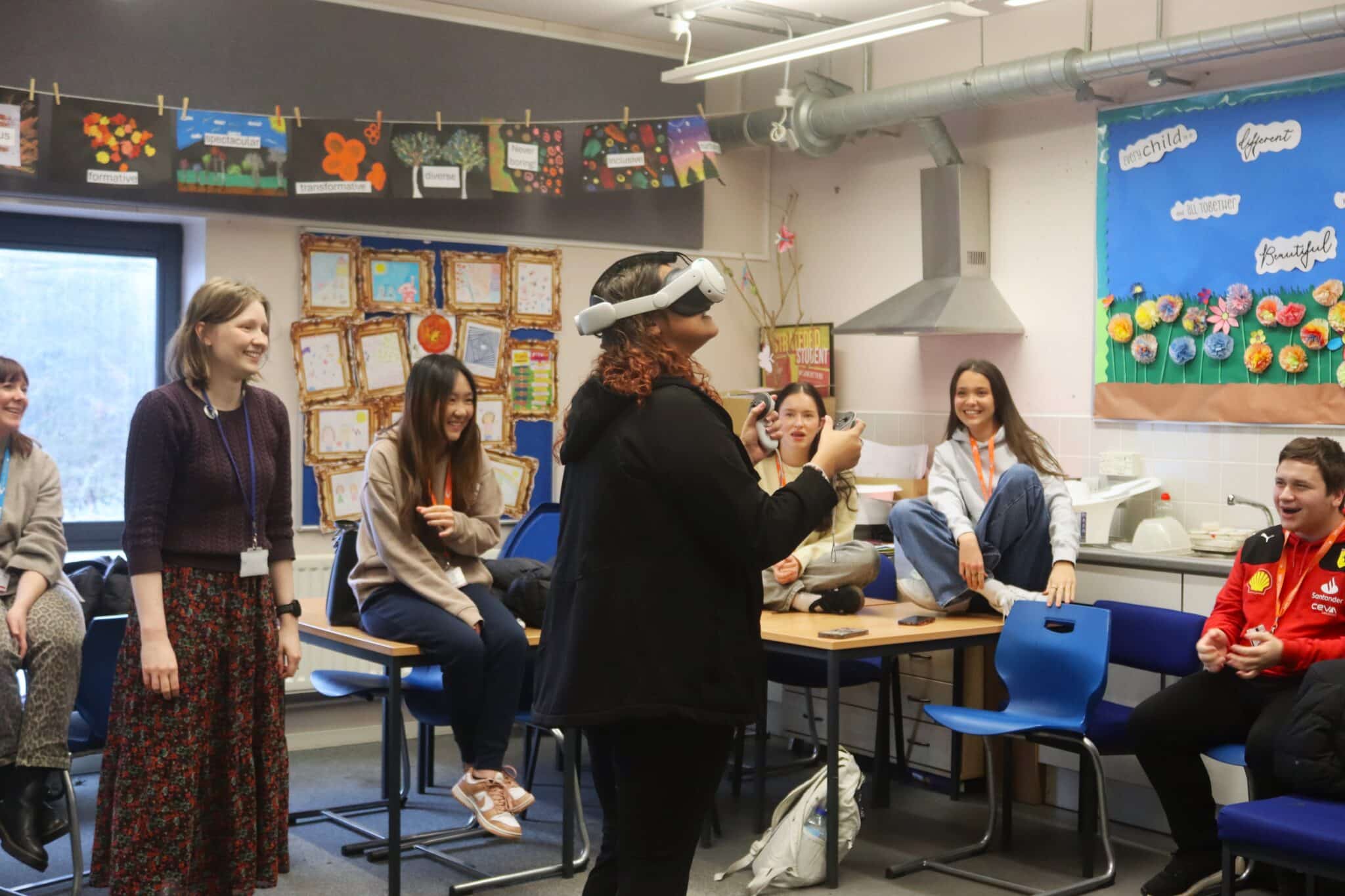
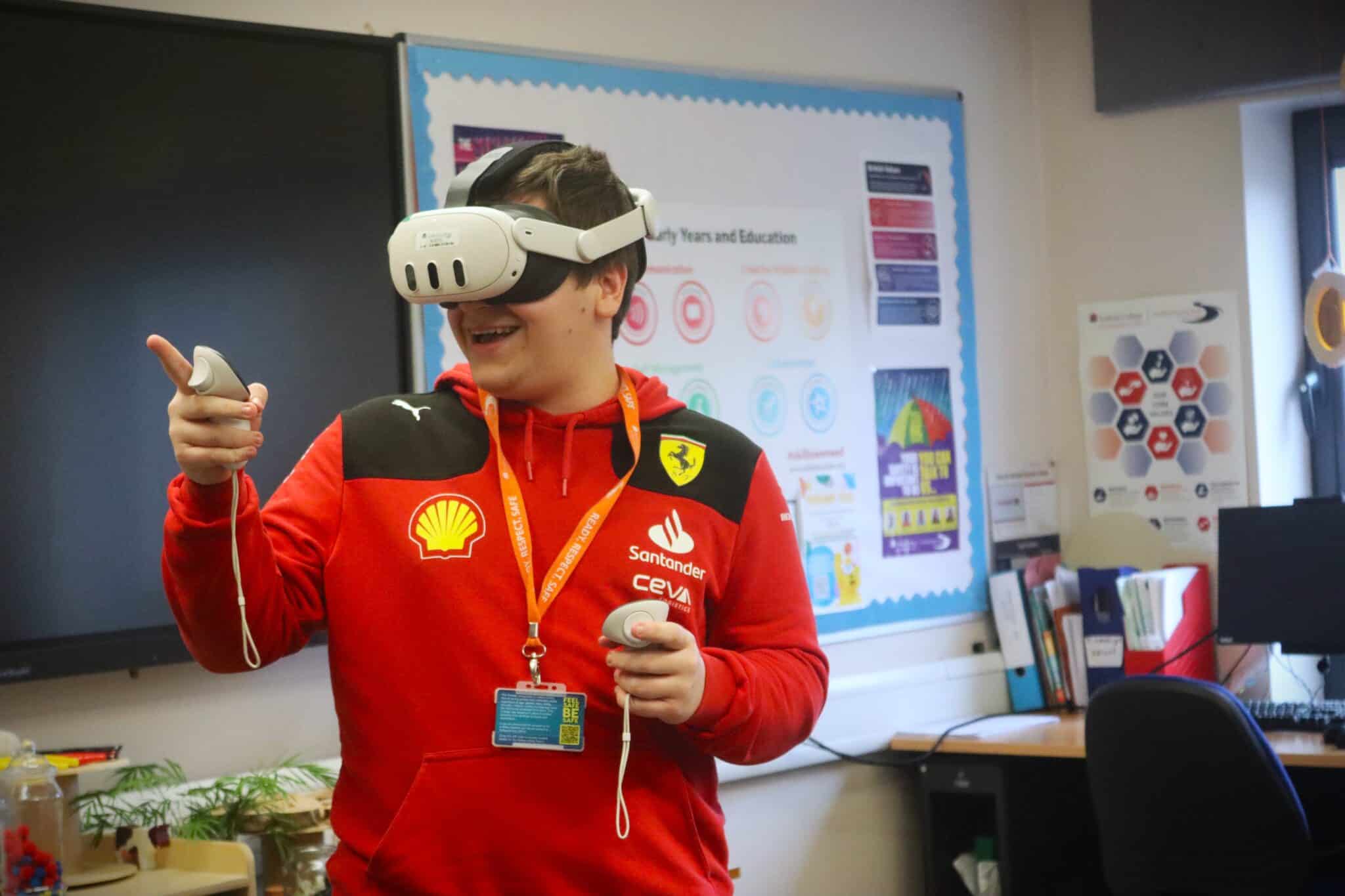
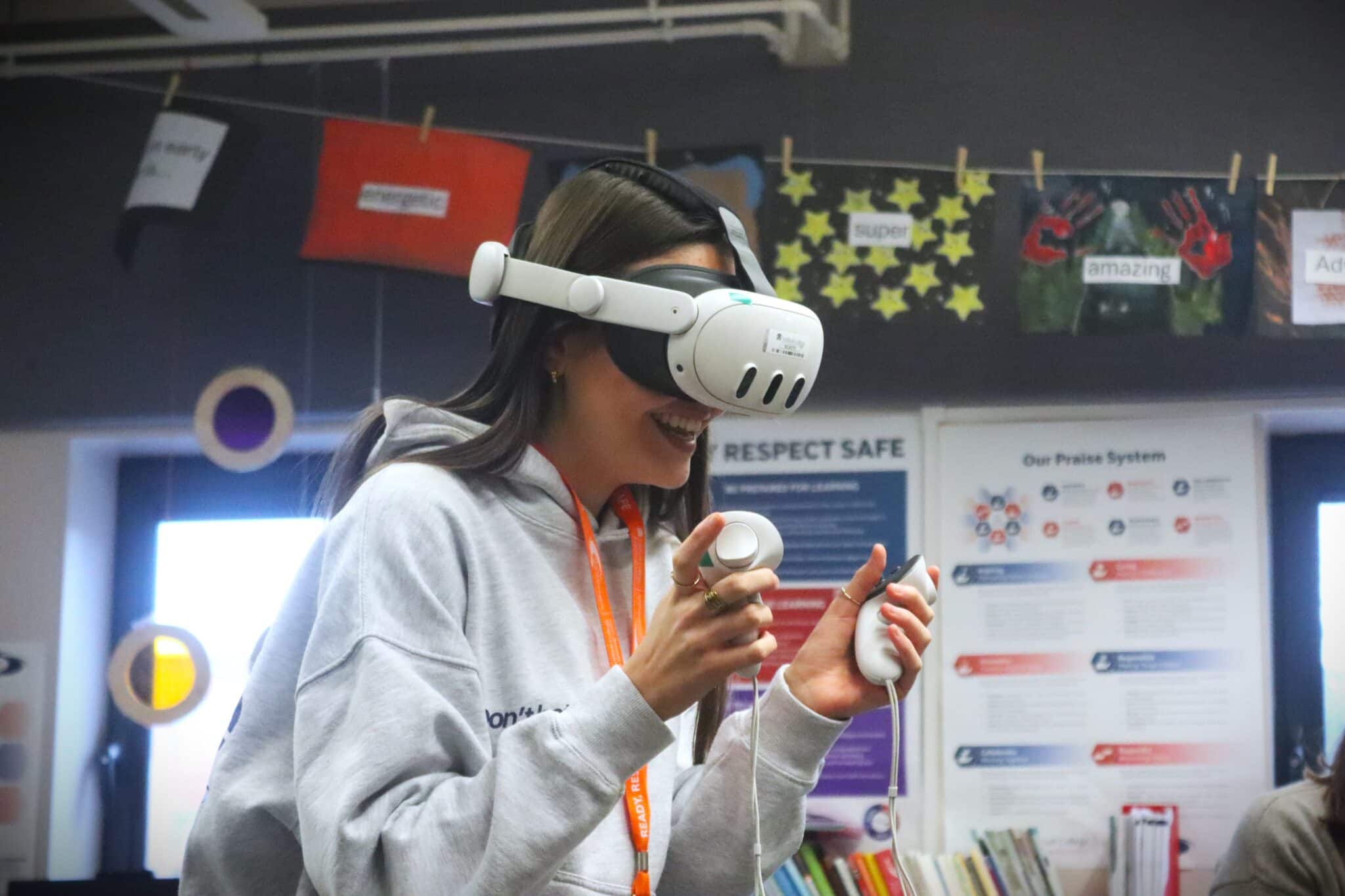
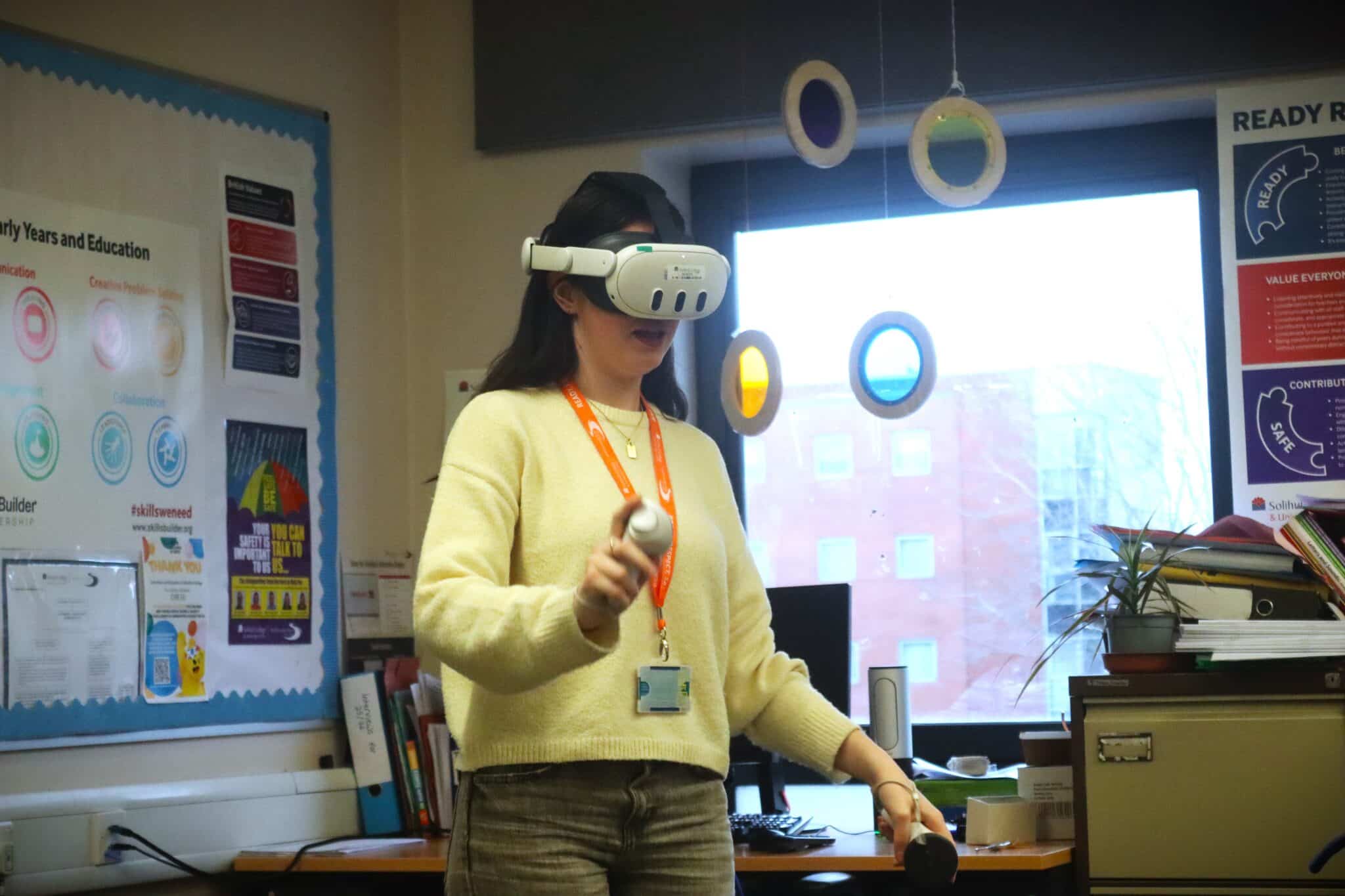
Students had a great time experimenting with the headsets and supported each other
T-Level students already benefit from extremely hands-on education, with the courses featuring a large industry placement. So practically engaging with this type of activity allows for even more practical experience to prepare them for their future.
Lecturer, Gemma Howie, detailed why this kind of session is useful for the students: “Letting students try out the VR headsets and some of the programmes available means they can start thinking about how they would plan activities and come up with teaching ideas for schools and how they might want to deliver those types of classes. They can apply this in both upcoming projects and in working roles in the future.”